
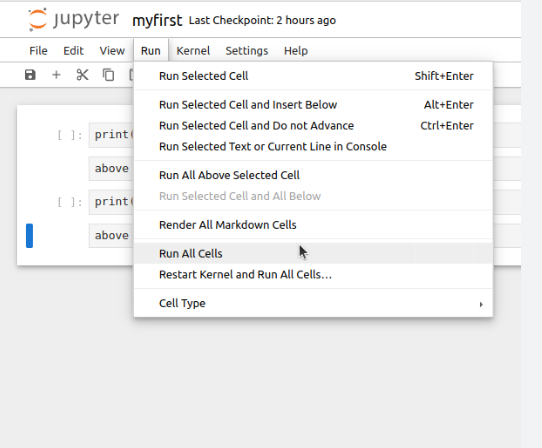


Introduction: Understanding Interactive Coding in Modern Data Science
In today’s data-driven world, interactive coding environments have become essential for learning, experimentation, and production-level development. Among these tools, Jupyter Notebook stands out as one of the most widely used platforms for beginners and professionals alike.
Unlike traditional programming editors, Jupyter Notebook allows you to write code in small sections called cells and execute them independently. This makes learning easier because you can test each part of your code step by step instead of running an entire script at once.
One of the most common questions beginners ask is how to effectively manage execution inside notebooks. Understanding how to run code in jupyter notebook is the first step toward becoming efficient in data science, machine learning, and Python programming.
This guide will walk you through everything from basic execution to advanced techniques, debugging strategies, shortcuts, best practices, and real-world usage scenarios. By the end, you will have a complete understanding of how execution works inside Jupyter environments and how to use it effectively.
We will also repeatedly explore how to run code in jupyter notebook in practical contexts so you can fully master its workflow.
What Makes Jupyter Notebook So Powerful?

Jupyter Notebook is not just a coding tool; it is an interactive computing environment. It combines code, text, equations, and visualizations in one place, making it ideal for data analysis and storytelling.
The biggest advantage of notebooks is their cell-based structure. Each cell can be executed independently, giving users more flexibility and control over their workflow.
Another powerful feature is immediate output rendering. As soon as a cell is executed, the result appears directly below it. This instant feedback loop is what makes learning and debugging faster.
When people start learning how to run code in jupyter notebook, they quickly realize that it is not about running a file but about managing a sequence of interactive steps.
Jupyter also supports multiple programming languages, though Python remains the most commonly used. This flexibility makes it suitable for a wide range of applications, including data science, research, and education.
Basic Execution Workflow in Jupyter Notebook
Understanding execution starts with the simplest concept: running a cell.
A notebook consists of two main types of cells:
- Code cells (executable)
- Markdown cells (documentation)
To execute a cell, you simply write code inside it and press Shift + Enter. The system processes the code and displays the output below.
At this stage, learning how to run code in jupyter notebook becomes intuitive because each action is visible instantly.
You can also use:
- Ctrl + Enter → Run without moving to the next cell
- Alt + Enter → Run and insert a new cell below
- Toolbar “Run” button → Manual execution
Each method serves different purposes depending on workflow needs.
The key concept is that execution is not linear like traditional scripts. You can run cells in any order, but this requires careful management of variables and dependencies.
If a variable is defined in a later cell but used earlier, errors will occur. This is one of the most important concepts to understand early.
Execution Order and Kernel Behavior
Behind every notebook is a computational engine called the kernel. The kernel stores variables, processes instructions, and returns outputs.
When you execute a cell, the kernel runs the code and keeps the results in memory.
This is why understanding how to run code in jupyter notebook also means understanding memory persistence.
If you restart the kernel, all variables are cleared, and the notebook resets to a blank state.
This behavior is useful but also dangerous if not managed properly. Running cells out of order can lead to unexpected results because the kernel remembers past executions.
A good practice is to always run notebooks from top to bottom before final submission or analysis.
Execution Patterns and Real-World Usage
In real projects, notebooks are rarely linear. They often involve experimentation, testing, and repeated execution of specific cells.
A common workflow includes:
- Importing libraries
- Loading datasets
- Cleaning data
- Running analysis
- Visualizing results
Each step is executed independently, allowing flexibility in experimentation.
At this stage, how to run code in jupyter notebook becomes more about managing workflow than simply executing code.
Data scientists often rerun specific cells multiple times while adjusting parameters or fixing errors.
This iterative process is what makes notebooks powerful for research and development.
Table: Jupyter Notebook vs Traditional Coding
| Feature | Jupyter Notebook | Traditional Python Script |
|---|---|---|
| Execution Style | Cell-based | Whole file execution |
| Output Display | Immediate below code | Terminal/console |
| Debugging | Easy step-by-step | Moderate difficulty |
| Learning Curve | Beginner-friendly | Moderate |
| Flexibility | High | Limited |
| Visualization | Built-in support | External tools needed |
This comparison clearly shows why notebooks are preferred in education and data science workflows.
Shortcuts That Improve Productivity
Efficiency is a major advantage when using notebooks. Keyboard shortcuts significantly improve workflow speed.
Common shortcuts include:
- Shift + Enter → Run cell
- A → Insert cell above
- B → Insert cell below
- D + D → Delete cell
- M → Convert to markdown
- Y → Convert to code
These shortcuts reduce dependency on mouse navigation and improve coding speed.
When learning how to run code in jupyter notebook, shortcuts are often overlooked but play a critical role in productivity.
Developers who master shortcuts can execute workflows much faster than beginners.
Debugging and Error Handling
Errors are a natural part of coding. In notebooks, debugging is easier because you can isolate individual cells.
Common errors include:
- NameError → variable not defined
- SyntaxError → incorrect syntax
- TypeError → incompatible operations
- IndexError → invalid indexing
Each error message provides useful clues about what went wrong.
A major advantage of notebooks is that you can rerun only the problematic cell instead of restarting the entire program.
Understanding how to run code in jupyter notebook also includes learning how to isolate and fix errors efficiently.
Using print statements and step-by-step execution helps track variable flow and identify issues quickly.
Restarting the kernel is also a useful debugging step when memory issues occur.
Advanced Execution Techniques

Once you are comfortable with basics, you can explore advanced features that make notebooks even more powerful.
Magic commands are one such feature. They provide special functionalities like timing execution, loading extensions, and system interaction.
Examples include:
%time→ measures execution time%matplotlib inline→ enables inline plots%%writefile→ writes code to external file
Advanced users also integrate APIs, machine learning models, and databases directly into notebooks.
At this stage, how to run code in jupyter notebook becomes part of a larger workflow involving automation and data pipelines.
Notebook extensions further enhance functionality by adding features like code folding, auto-completion, and variable tracking.
These tools transform notebooks into full-fledged development environments.
Best Practices for Clean Execution
Writing clean notebooks improves readability and reduces errors.
Some best practices include:
- Always run cells in order
- Avoid unnecessary global variables
- Restart kernel before final execution
- Keep related code in single sections
- Use markdown for explanations
Maintaining structure is important for both personal use and collaboration.
Another key habit is regularly saving your notebook and checking output consistency.
At this stage, how to run code in jupyter notebook is not just about execution but about maintaining a disciplined workflow.
Clean notebooks are easier to debug, share, and reuse.
Always restart the kernel and run all cells before sharing your notebook to ensure reproducibility and avoid hidden execution errors.
This simple step ensures that your notebook works exactly as intended in any environment.
Common Mistakes Beginners Make
Beginners often face similar challenges when using notebooks:
- Running cells out of order
- Forgetting to define variables
- Not restarting kernel after changes
- Mixing unrelated code in one cell
- Ignoring error messages
Avoiding these mistakes significantly improves coding efficiency.
FAQs
What is a Jupyter Notebook used for?
It is used for data analysis, machine learning, visualization, and interactive programming.
Can I install libraries inside a notebook?
Yes, you can install libraries using pip commands directly inside cells.
Why does my notebook stop responding?
This usually happens due to memory overload or infinite loops. Restarting the kernel helps.
Can I share my notebook with others?
Yes, notebooks can be exported as .ipynb, PDF, or HTML files.
Do I need internet to use Jupyter Notebook?
No, once installed, it works offline on your local system.
Conclusion: Mastering Notebook Execution for Real Productivity
Jupyter Notebook is more than just a coding tool—it is an interactive environment designed for learning, experimentation, and professional development.
By understanding cell execution, kernel behavior, debugging techniques, and advanced features, you can significantly improve your workflow.
Mastering how to run code in jupyter notebook helps you build confidence in programming, speed up data analysis tasks, and reduce errors during development.
With consistent practice, proper structure, and efficient execution habits, you can turn notebooks into powerful tools for research, machine learning, and software development.
The key is to experiment, practice regularly, and maintain clean, organized notebooks that are easy to understand and reproduce.