

Introduction
Learning programming is like learning a new language for machines. At first, it feels confusing because you are not just writing words—you are giving instructions to a computer that must be precise, structured, and logically correct. Many beginners can write code but struggle when it comes to execution. Understanding the full journey from writing to output is where real confidence begins.
When people start their coding journey, they often ask a simple but very important question: how does the code actually come alive and produce results on a screen? That transformation is what we will explore in depth throughout this guide.
Understanding the Foundation of Code Execution


Before diving into tools and environments, it is important to understand what happens behind the scenes when a program runs. Code is nothing more than human-readable instructions. Computers, however, only understand binary language—0s and 1s.
This gap is filled by compilers and interpreters. They translate your written instructions into machine-level operations that the system can execute.
At this stage of learning, understanding how to run code becomes essential because it connects theory with practice. Without execution, programming remains just text on a screen.
Every time you press “run,” a complex chain of events happens instantly: parsing, translation, memory allocation, execution, and output generation. Although it seems simple to the user, it is a multi-layered process in reality.
Why Execution is the Heart of Programming
Writing code is just one part of programming. Execution is where logic becomes reality. Without execution, even perfect syntax has no value.
When learners first discover how to run code, they begin to understand the real purpose of programming: solving problems using machines.
Execution also helps in:
- Testing logic step by step
- Finding errors early
- Improving performance
- Understanding program flow
Without running programs, debugging and improvement would be impossible.
Different Ways to Run Programs in Modern Computing
There are multiple ways to execute code depending on your setup and goals. Each method has its own strengths and limitations.
| Method | Description | Best For | Difficulty |
|---|---|---|---|
| Local Execution | Running code on your system | Professional projects | Medium |
| IDE Execution | Using integrated tools | Beginners & developers | Easy |
| Browser Execution | Running in web tools | Web development | Very Easy |
| Cloud Execution | Online servers | Collaboration | Easy |
| Mobile Execution | Apps on phone | Practice & learning | Easy |
This variety allows developers to choose the best environment depending on their needs.
Setting Up Your First Coding Environment
To properly understand programming execution, you need a working environment. This includes:
- A code editor or IDE
- Installed programming language
- Terminal or command prompt
- Optional libraries or frameworks
Many beginners begin by learning how to run code in a simple editor before moving to advanced tools.
A proper setup ensures fewer errors and smoother learning. It also helps you focus more on logic rather than technical issues.
Choosing the Right Tools for Programming
A code editor is like your workspace. A clean and efficient editor makes coding easier and more enjoyable.
Popular tools include:
- Visual Studio Code
- PyCharm
- IntelliJ IDEA
- Sublime Text
These tools support extensions that simplify execution, debugging, and project management.
Executing Programs on Local Systems
Local execution means running programs directly on your computer using installed software and compilers. This method gives full control over the system and is widely used by professionals.
When learning how to run code, local execution is often the next step after online practice tools.
Steps for Local Execution
- Install programming language
- Write code in a file
- Open terminal or command prompt
- Run using commands
- View output
For example:
- Python:
python file.py - Java:
javac File.java && java File - C++:
g++ file.cpp && ./a.out
This method gives deeper understanding of how systems work internally.
Understanding IDE-Based Execution
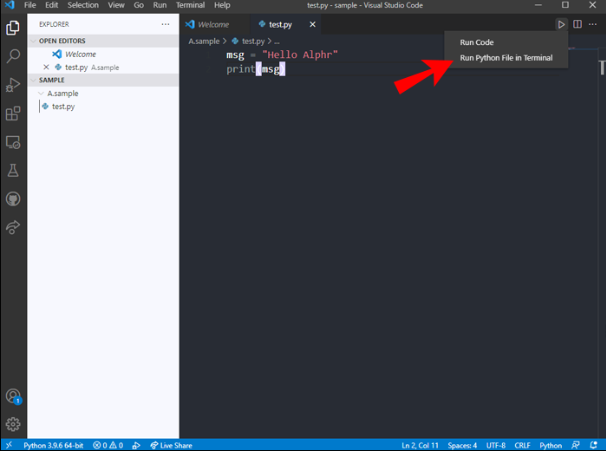
Integrated Development Environments (IDEs) simplify programming by combining all tools in one place. Instead of manually running commands, you simply click a button.
At this stage, many learners first experience how to run code in a seamless and beginner-friendly way.
IDE features include:
- One-click execution
- Syntax highlighting
- Auto-completion
- Built-in debugging
- Project management tools
Why IDEs are Important
IDEs reduce complexity and help beginners focus on logic instead of setup. They are especially useful for large projects where multiple files and dependencies exist.
Browser-Based Code Execution
Modern web browsers have become powerful enough to run programs directly. JavaScript, in particular, runs natively in browsers without any installation.
This method is widely used in web development and quick testing environments.
Developers often explore how to run code in browser consoles to test small scripts instantly.
You can use:
- Developer tools in Chrome
- Online editors like CodePen
- Interactive platforms like JSFiddle
This approach is fast, lightweight, and beginner-friendly.
Cloud Platforms for Running Code
Cloud computing has revolutionized programming. Instead of relying on local systems, you can run code on remote servers.
Cloud execution is powerful because it allows collaboration and access from any device.
Benefits of Cloud Execution
- No installation required
- Access from anywhere
- High-performance servers
- Easy collaboration with teams
Many developers use cloud platforms to learn how to run code efficiently without worrying about system limitations.
Table: Comparison of Execution Environments
| Environment | Speed | Setup Required | Internet Needed | Best Use |
|---|---|---|---|---|
| Local System | High | Yes | No | Professional work |
| IDE | High | Yes | No | Development |
| Browser | Medium | No | Yes | Web testing |
| Cloud | High | No | Yes | Collaboration |
| Mobile Apps | Medium | No | Sometimes | Learning |
This comparison helps you choose the right platform based on your goals.
Debugging and Fixing Errors During Execution
Errors are a natural part of programming. No matter how experienced you are, mistakes will happen.
Understanding how to run code also means learning how to handle errors effectively.
Common Types of Errors
- Syntax errors (grammar mistakes)
- Runtime errors (program crashes during execution)
- Logical errors (wrong output despite correct execution)
Debugging Techniques
- Read error messages carefully
- Break code into smaller parts
- Use print statements
- Use debugging tools in IDEs
Always test small sections of code before running the full program. This makes debugging much easier and faster.
Mobile Coding and On-the-Go Execution
Programming is no longer limited to laptops or desktops. Mobile apps now allow coding directly from smartphones.
This is especially useful for beginners who want to practice anywhere.
Apps like Dcoder and Pydroid make how to run code accessible even without a computer.
However, mobile coding is best for practice rather than large-scale development due to screen size and performance limitations.
Advanced Execution Concepts for Developers
Once you become comfortable with basics, you can explore advanced execution concepts such as:
- Multi-threading
- Memory management
- Virtual environments
- Containers like Docker
- Continuous integration pipelines
These concepts are used in real-world software development to optimize performance and scalability.
At this stage, learners already understand how to run code and begin focusing on efficiency and architecture.
Real-World Importance of Code Execution
Execution is not just a technical step—it is the backbone of all software systems.
From mobile apps to banking systems, everything depends on proper execution of code.
Industries that rely heavily on programming include:
- Web development
- Artificial intelligence
- Game development
- Data science
- Cybersecurity
Without execution, none of these systems would function.
Best Practices for Smooth Code Execution

To improve your programming experience, follow these simple practices:
- Keep your code clean and organized
- Use meaningful variable names
- Test frequently
- Learn debugging tools
- Avoid unnecessary complexity
These habits make execution smoother and reduce errors significantly.
Programming is not about memorizing syntax. It is about understanding logic and learning how to run code effectively in different environments. Once you master execution, learning any language becomes much easier.
Common Mistakes Beginners Make
Many beginners face similar problems when starting:
- Forgetting to install dependencies
- Running wrong file paths
- Ignoring error messages
- Not understanding program flow
Avoiding these mistakes can speed up your learning process significantly.
FAQs
What is the easiest way to start running programs?
Online compilers or simple IDEs are the easiest because they require no setup.
Do all programming languages run the same way?
No, compiled and interpreted languages work differently during execution.
Can I run code without installing software?
Yes, cloud platforms and browser-based tools allow execution without installation.
Why does my code sometimes not run?
Usually due to syntax errors, missing files, or incorrect commands.
Is coding on mobile effective?
It is good for practice but not ideal for large projects.
Conclusion
Programming becomes truly powerful only when you understand execution deeply. Learning how to run code is the bridge between writing logic and seeing real results. Whether you are using a local system, IDE, browser, mobile app, or cloud platform, each method teaches you something valuable about how software works.
The key to mastering programming is practice, patience, and curiosity. Start simple, experiment often, and gradually explore advanced environments. Over time, running programs will feel natural, and you will focus more on solving problems rather than worrying about execution.
Once execution becomes second nature, you unlock the true power of programming and open the door to building real-world applications with confidence.